Professional Water Damage Evaluation Guide
Water damage evaluation identifies the source, category, and classification of moisture affecting a property before restoration begins. VIP Restoration inspects affected areas, checks for contamination, and measures moisture levels in walls and flooring. Since mold growth starts within 24 to 48 hours, this assessment determines drying equipment, timeline, and repair scope for homeowners and property managers.
Key Takeaways
- Water damage accounts for nearly 30% of all home insurance claims in the United States annually.
- Mold growth begins within 24 to 48 hours if water damage signs go unaddressed immediately.
- VIP Restoration Inc. identifies and stops water sources as the first critical restoration step.
- Water damage restoration returns properties to original condition through assessment, removal, sanitizing, and drying.
Why Does a Water Damage Evaluation Matter?
A Professional Water Damage Evaluation determines exactly how far water has traveled through a structure before repairs ever begin. Skipping this step costs property owners more than money. It risks their family’s or tenants’ health and the building’s long-term stability. Sacramento homeowners and property managers face a narrow window to act. That evaluation is what turns guesswork into a clear plan.
Delays carry real consequences. A burst pipe, a failing roof, or a sewage backup left unchecked can trigger costly secondary damage, including mold growth and structural deterioration. What starts as a contained leak can spread into wall cavities, subfloors, and insulation within hours, multiplying repair costs along the way.
How Fast Can Water Damage Turn Into a Bigger Problem?
Faster than most owners expect. Ignoring early warning signs allows mold to develop in as little as 24 to 48 hours. Trapped moisture continues weakening framing and drywall over time. That short timeline is precisely why a formal evaluation, not a casual walk-through, needs to happen immediately after any water event.
What Happens If a Property Owner Skips the Evaluation Step?
Unchecked water intrusion can halt daily household or business activity almost overnight. Consequences of skipping a formal assessment include:
- Mold colonies establishing within one to two days of exposure
- Structural weakening in framing, subfloors, and drywall
- Safety hazards from electrical systems or compromised flooring
- Higher repair costs once damage spreads beyond the original source
VIP Restoration, based in Sacramento, CA, works directly with local homeowners and property managers who need answers fast. A structured evaluation protects both the property and the people inside it, replacing uncertainty with a documented, actionable path forward.
What Happens During a Professional Water Damage Evaluation?
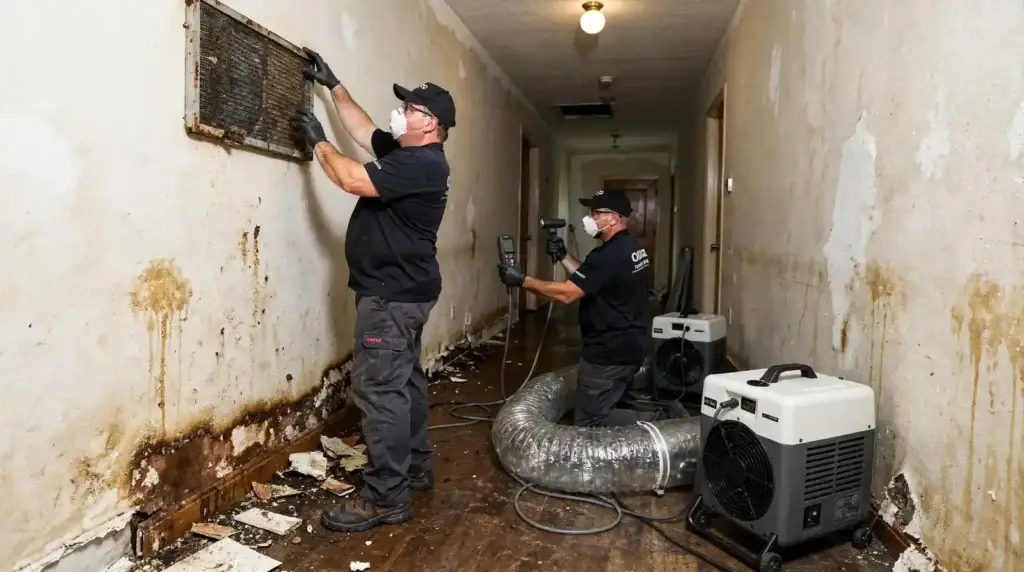
A professional water damage evaluation starts with a detailed inspection of the property, including a formal damage assessment. Standing water rarely tells the whole story. Hidden moisture inside walls, subfloors, and insulation causes far greater losses than the visible puddle on the floor. Skipping a thorough evaluation risks incomplete drying, lingering odors, and mold growth that surfaces weeks later.
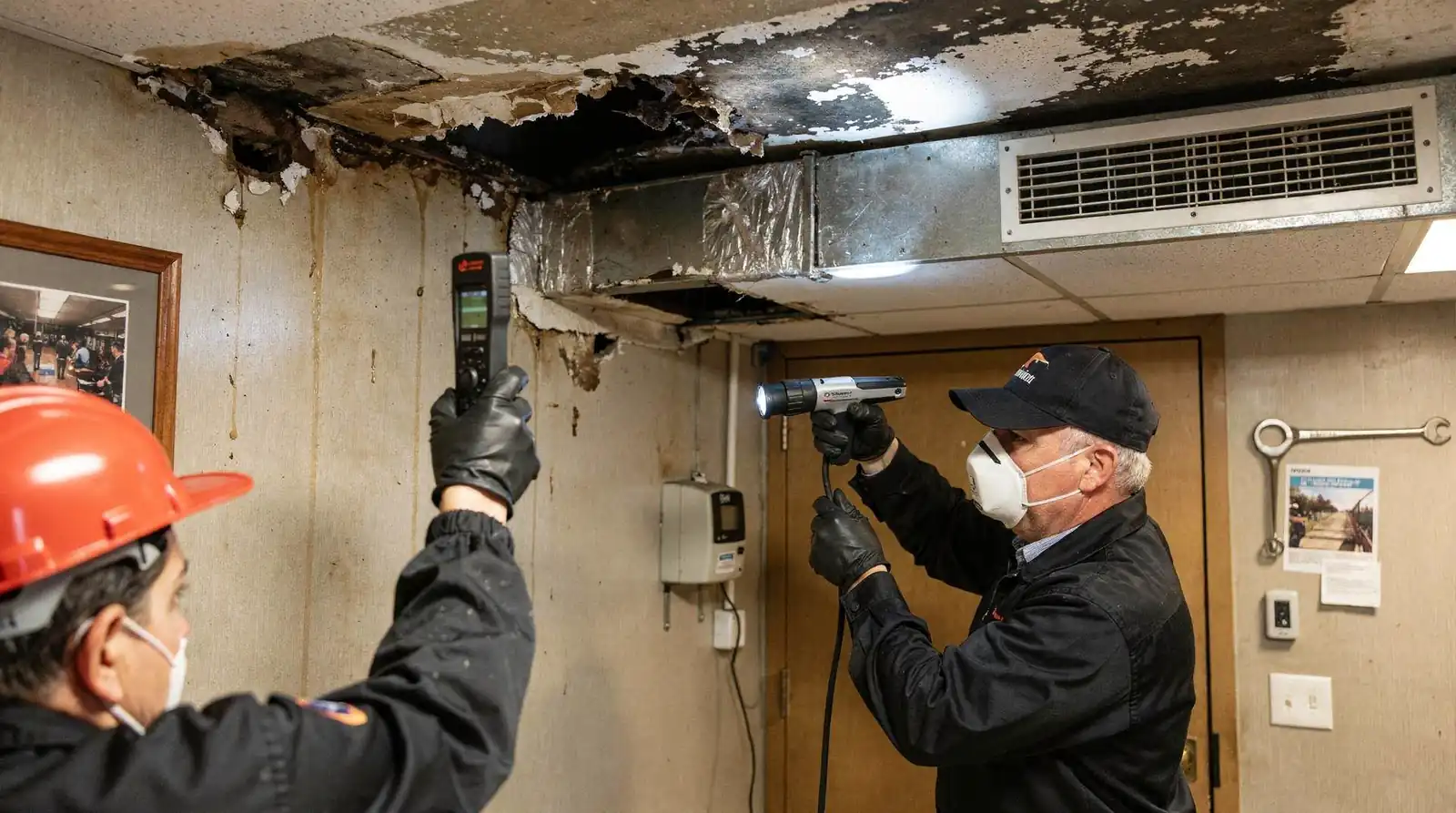
Trained technicians move through the property methodically. They determine the source of the water intrusion, assess the extent of the damage, and use specialized tools such as moisture meters and infrared cameras to locate hidden pockets of saturation. This step matters because materials that look dry to the eye often retain moisture deep within their structure.
What steps does an inspection team follow on-site?
A qualified team responds promptly and conducts a room-by-room assessment of every affected area. From there, the crew applies controlled extraction and drying methods designed to stop further damage before it spreads. The sequence typically includes:
- Locating and documenting the water source
- Measuring moisture levels in walls, floors, and ceilings
- Mapping the scope of affected materials
- Extracting standing water with commercial-grade equipment
- Setting up drying equipment based on assessment findings
Why does fast containment matter so much?
Delays between discovery and containment allow water to spread into unaffected areas. Effective evaluation depends on fast containment, professional drying, and coordinated repair planning working together, not separately. Property managers who wait for a “convenient time” often trade a small repair for a much larger reconstruction project.
Each finding from the evaluation feeds directly into the restoration plan that follows. Structural drying targets, equipment placement, and repair sequencing all trace back to what the inspection uncovers. A rushed or incomplete assessment sets the entire restoration timeline off course. Accuracy at this stage protects both the property and the budget.
How Do Experts Identify the Water Source?
Trained technicians locate the origin of an intrusion first, then shut it off before any other work begins. A burst pipe, roof leak, or appliance failure keeps feeding damage until someone stops it at the source. Skipping this step wastes time and money, since drying equipment cannot outpace an active leak. Every Professional Water Damage Evaluation starts with this search-and-stop process. Structural drying only works once the flow of water has ended.
Once the source is confirmed and stopped, technicians classify the water itself. Industry standards require identifying the category and classification of the water present. Contamination levels dictate handling procedures, safety gear, and disposal methods. Clean supply-line water calls for a different response than water carrying sewage or chemical residue.
Why does classifying the water matter for restoration?
Classification determines how a structure gets treated, not just how it gets dried. Restoring a property safely to industry specifications depends on knowing whether the water is sanitary, contaminated, or grossly unsanitary. Misclassifying the water risks health hazards and improper repairs down the line.
Organized inspection workflows also protect the building’s long-term condition. Accurate moisture management, paired with a structured process, limits interruptions and shields the property from hidden deterioration behind walls or under flooring.
Typical source-identification steps include:
- Walking the property to trace visible water paths and staining
- Checking plumbing, appliances, and roofing for active leaks
- Confirming whether the source has fully stopped
- Testing water samples to assign a contamination category
- Documenting findings before drying equipment gets deployed
Homeowners who report leaks quickly give inspectors a clearer trail to follow, which speeds up both source confirmation and the classification step that follows.
What Belongs in a Water Damage Report?
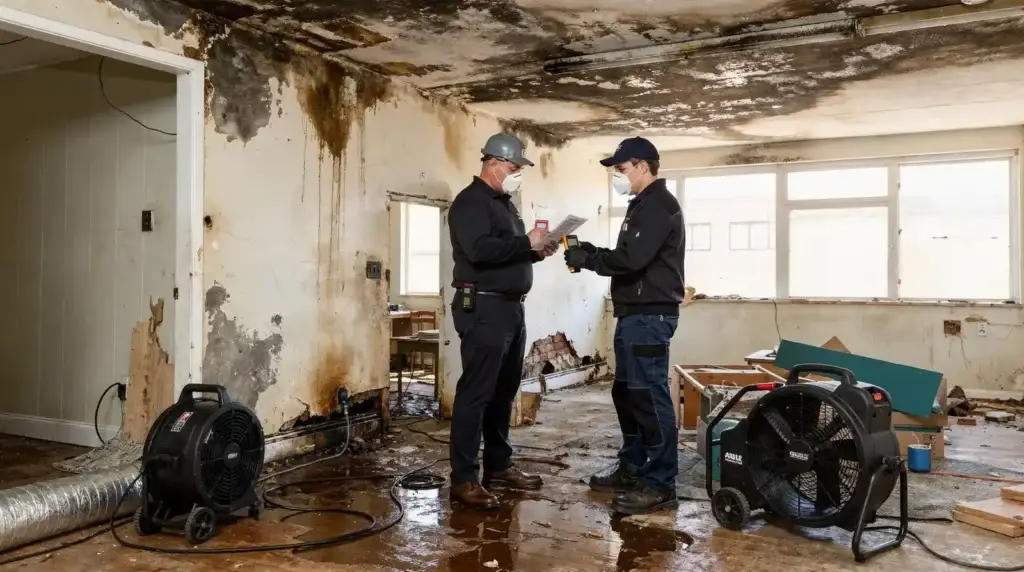
A complete report identifies the water source, documents affected materials, and outlines a specific repair timeline. Nearly 30% of all home insurance claims in the U.S. involve water damage, so thorough documentation carries real financial weight for property owners filing a claim. Missing details in this paperwork can delay reimbursement or leave gaps in coverage.
A Professional Water Damage Evaluation typically includes moisture readings, photographs of impacted areas, and a written summary explaining the extent of structural damage. Each finding should connect to a recommended action, whether that means extraction, drying equipment, or removal of damaged materials. Property managers benefit from reports that separate immediate hazards from longer-term repair needs.
What should a homeowner expect after the inspection?
Clients should receive clear guidance and daily updates covering everything from the initial assessment through cleanup and structural repairs. This ongoing communication keeps homeowners and managers informed at every stage, not just at the start. A restoration provider stays involved through the full process rather than disappearing after the walkthrough.
Why does report clarity matter for repairs?
A clear, well-organized evaluation helps property owners understand exactly what steps are needed to fully restore the home. Vague or incomplete reports leave gaps that slow down repairs and complicate insurance conversations. The best reports translate technical findings into a straightforward action plan:
- Source of intrusion and current status
- Moisture levels across affected rooms
- Materials requiring removal or drying
- Recommended timeline for repairs
What Should You Do After Evaluation?
Property owners should contact a restoration provider immediately once a professional water damage evaluation confirms the scope of intrusion. VIP Restoration offers fast, reliable water damage restoration built on clear communication and efficient results, giving homeowners and property managers a direct path from assessment to action. Delaying repairs after an evaluation allows moisture to spread. Scheduling mitigation work right away protects both structure and belongings.
The restoration team is equipped to manage large-scale projects and understands how critical it is to limit downtime for occupants. Whether the affected space is a single-family home or a multi-unit property, the priority remains the same: secure the area, stop further damage, and return it to a safe, functional condition.
How Fast Should Restoration Begin After an Inspection?
Restoration should begin as soon as possible after the evaluation report is complete. Quick response minimizes secondary damage, protects valuable belongings, and helps residents resume normal use of their space sooner rather than later.
More than 40 years of combined experience. Thousands of completed projects give the team a deep understanding of complex restoration challenges, from hidden moisture pockets to structural drying needs. That level of experience translates into a clear post-evaluation plan, typically including:
- Securing the property to prevent additional intrusion or safety hazards.
- Removing standing water and moisture from affected materials.
- Documenting damage for insurance coordination and repair planning.
- Beginning structural drying to stop mold growth before it starts.
Following these steps promptly keeps small problems from becoming expensive, long-term repairs.
Water damage evaluation stands as the critical first step toward protecting your property’s structural integrity and your family’s health. A thorough assessment identifies hidden moisture, determines the scope of remediation needed, and establishes the foundation for effective restoration. By addressing water damage promptly and comprehensively, you safeguard your investment and restore confidence in your home’s safety and durability.
Essential Facts About Water Damage Restoration
A professional water damage evaluation gives Sacramento homeowners and property managers the clarity needed to act before hidden moisture becomes a larger structural or health issue. The process ties source identification, water categorization, moisture detection equipment, and detailed documentation into one actionable report that supports both repair planning and insurance claims. Each of these elements exists to close the gap between discovery and drying, since delay is what turns a contained leak into extensive, costly damage. If your property shows signs of water intrusion, VIP Restoration is ready to walk you through a thorough evaluation and the next steps toward restoration.
FAQ
What does a water damage evaluation involve?
Technicians use moisture meters and infrared cameras to locate hidden saturation behind visible surfaces.
How quickly does mold develop after water damage?
Mold growth begins within 24 to 48 hours if water damage signs go unaddressed. This narrow window is why a formal evaluation must happen immediately after any water event.
What happens if a property owner skips the evaluation?
Delaying action lets damage compound out of sight, so by the time problems surface on their own, repairs cost more and insurance documentation gets harder to piece together. Scheduling a professional evaluation as soon as intrusion is discovered gives owners a documented moisture record and a clear repair timeline instead of guesswork later.
Essential Facts About Water Damage Restoration
A professional water damage evaluation gives Sacramento homeowners and property managers the clarity needed to act before hidden moisture becomes a larger structural or health issue. The process ties source identification, water categorization, moisture detection equipment, and detailed documentation into one actionable report that supports both repair planning and insurance claims. Each of these elements exists to close the gap between discovery and drying, since delay is what turns a contained leak into extensive, costly damage. If your property shows signs of water intrusion, VIP Restoration is ready to walk you through a thorough evaluation and the next steps toward restoration.