Commercial Water Damage Assessment: Property Damage Restoration
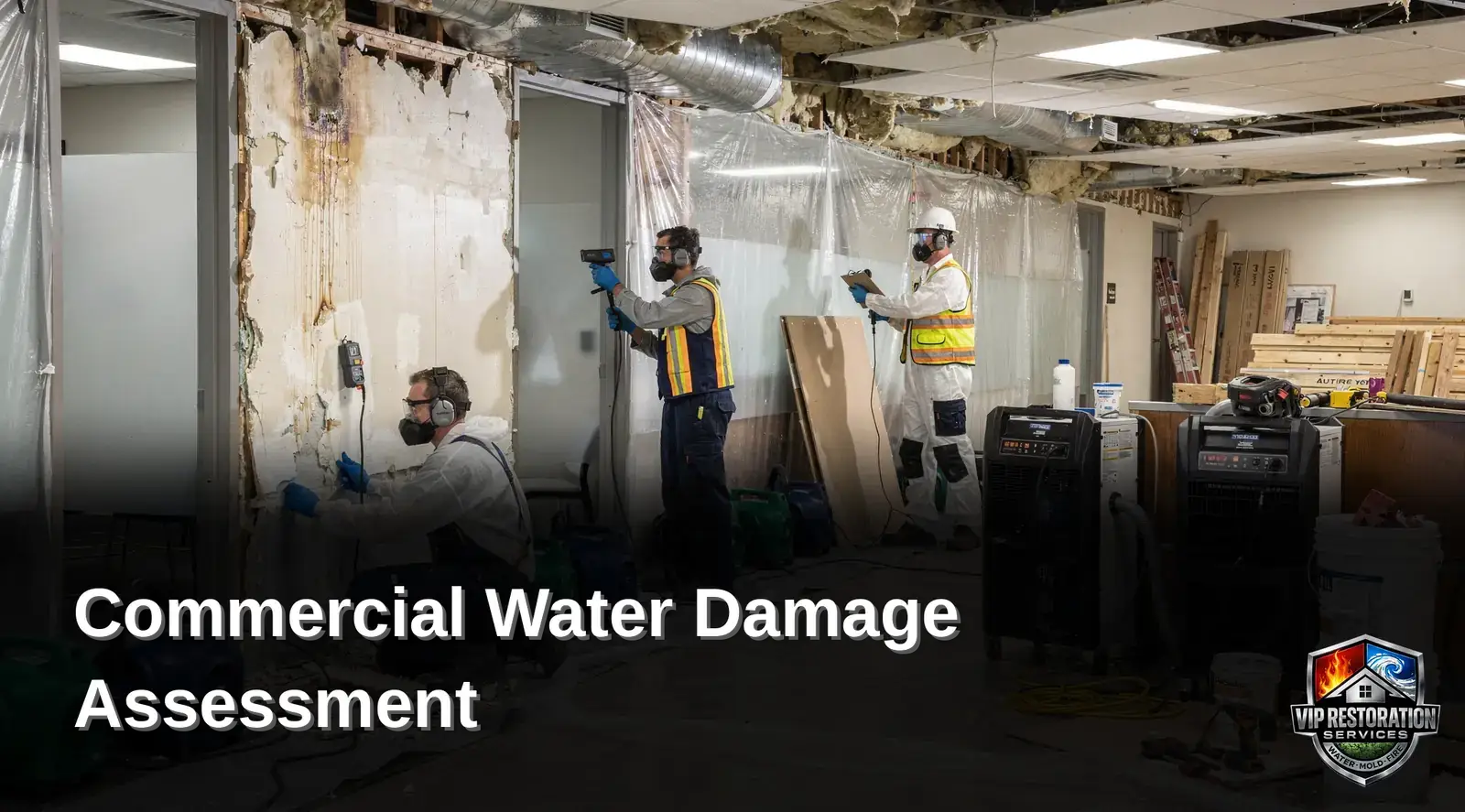
Commercial water damage assessment procedures start with source identification and containment, followed by water category classification, moisture mapping, and structural evaluation. VIP Restoration inspects affected areas throughout Sacramento facilities, documents damage scope, and builds a coordinated drying. Repair plan that limits business interruption, protects inventory, and prevents secondary issues like mold growth.
Essential Overview of the Commercial Restoration Process
- VIP Restoration Inc. in Sacramento, CA identifies and stops water sources as the first restoration step.
- Water damage restoration returns properties to original condition through assessment, removal, sanitization, and structural drying.
- Commercial water damage services address office complexes, retail spaces, warehouses, healthcare facilities, and industrial sites.
- Detailed property inspection determines damage scope to develop an appropriate restoration action plan.
What Should You Prepare Before a Water Damage Assessment?
Property managers gain the most from a commercial water damage assessment when they arrive with documentation and access ready. Unresolved water intrusion creates immediate problems: disrupted daily operations, affected tenants, and compliance concerns that grow more serious the longer they go unaddressed. VIP Restoration provides commercial water damage assessment services built for active commercial properties throughout the Sacramento area. Preparation on the property side speeds every step that follows.
The assessment process starts with a detailed inspection of the building to determine the scope of damage before any action plan takes shape. That inspection moves faster when key materials are already on hand.
What documents and access should be ready for the inspection team?
Facility directors should gather building layouts, prior water-loss records, and lease or tenant contact information before the crew arrives. Access matters just as much as paperwork.
- Floor plans or building schematics showing utility shutoffs
- Contact list for affected tenants or department heads
- Insurance policy details and any prior claim history
- Clear access to mechanical rooms, crawl spaces, and affected units
- A designated on-site contact available during the inspection window
Why does early preparation matter for commercial properties?
Fast containment, professional drying, and coordinated repairs depend on accurate information gathered at the outset. Delays in access or documentation slow the entire recovery timeline and extend downtime for tenants and operations.
Buildings with organized records and clear site access typically move into containment and drying phases without unnecessary interruption. That structured approach protects the property, limits business disruption, and keeps the restoration timeline on track from day one.
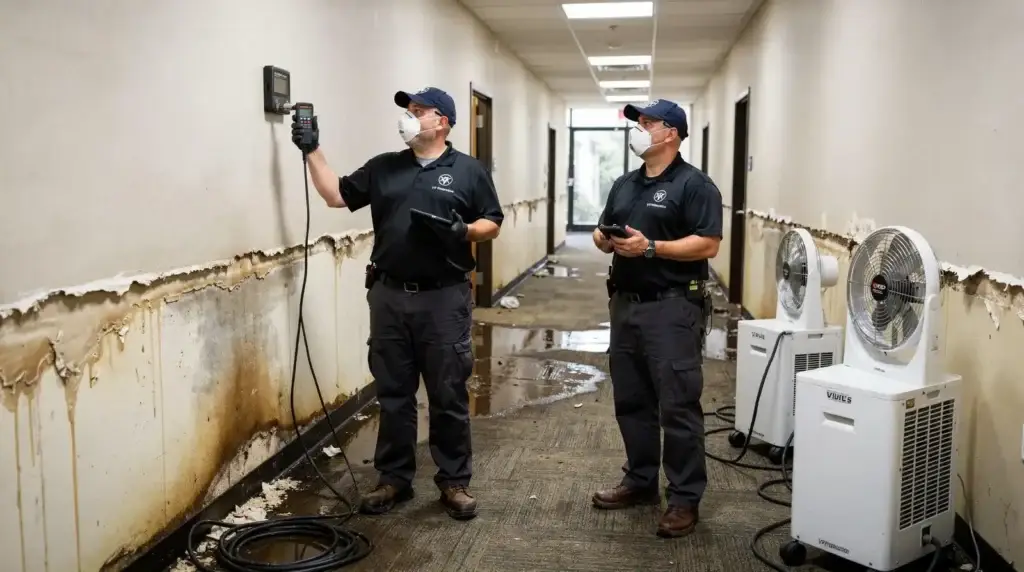
How Do You Locate and Stop the Water Source?
Locating the water source requires a systematic walk-through of the affected property, starting with the most likely culprits: plumbing lines, roofing systems, and mechanical equipment. Skipping this step costs businesses far more than a delayed repair. Every hour water keeps flowing adds volume to the loss and expands the area requiring drying. A thorough Commercial Water Damage Assessment identifies exactly where water is entering the building before any restoration work begins.
VIP Restoration’s Sacramento-based technicians follow a defined process for source identification and containment:
- Inspect visible plumbing, fixtures, and appliances connected to water lines for leaks or failures.
- Check roofing, windows, and exterior walls if no interior plumbing source is found.
- Shut off the relevant water supply line or main valve to stop active flow.
- Confirm the source has stopped before moving equipment or personnel into the drying phase.
Why Does Stopping the Source Matter Before Drying Starts?
Drying equipment cannot correct a problem that keeps growing. Structural drying only works once the water source has been fully stopped. Continued intrusion would soak materials faster than air movers and dehumidifiers can remove moisture. Skipping this sequence wastes labor and equipment time on a losing battle.
What Happens After the Source Is Secured?
Once the leak or intrusion point is confirmed stopped, technicians move into damage mapping and moisture readings across affected zones. The team is equipped to handle large-scale commercial projects, understanding that every hour of downtime affects tenants, inventory, and revenue. Clear communication with property managers continues throughout, keeping facility directors informed as containment shifts into full assessment and drying.
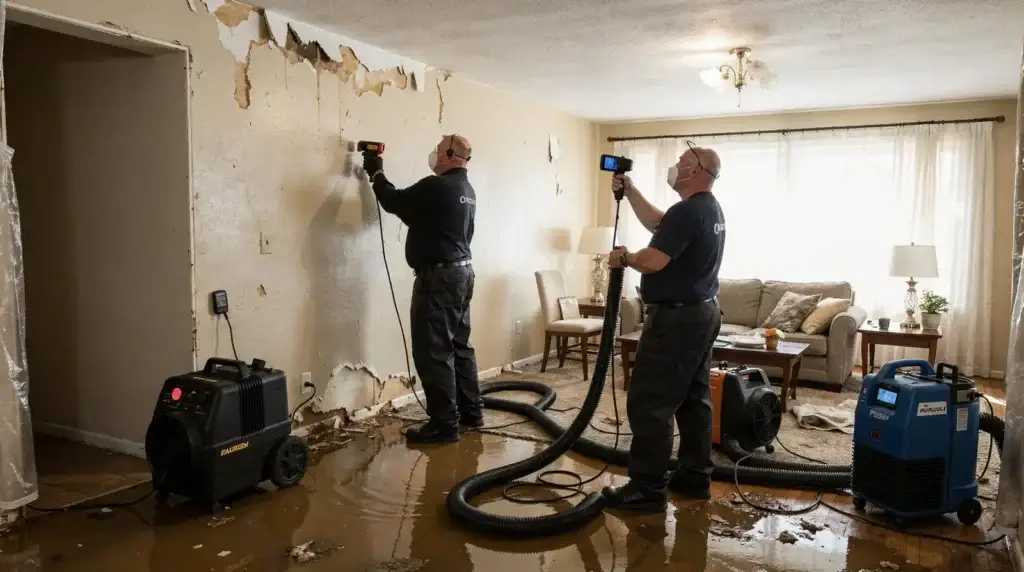
How Do You Classify Water Type and Survey Extent?
Classification starts with identifying the category. Source of water present, then measuring how far contamination and moisture have traveled through the structure. Facility directors face real financial exposure at this stage: misjudging the water category leads to incomplete drying, hidden mold growth, and repeat service calls that extend business closures. A structured commercial water damage assessment protects against those costly missteps by pairing technical classification with a thorough moisture survey before any equipment goes to work.
Before assessors begin, building access must be confirmed and any active safety hazards, such as electrical exposure or structural instability, need to be addressed. Once the site is safe to enter, the survey follows a defined sequence:
- Walk the affected space and document every visibly wet surface, material, and room.
- Identify the source of the water intrusion and confirm whether it has been stopped.
- Determine the category of water — clean, gray, or contaminated — since VIP Restoration’s team must classify the water accurately to restore the property safely to industry specifications.
- Match restoration processes and equipment to the contamination level found, since the specific type of water identified determines which methods apply to the loss.
- Begin controlled extraction and structural drying based on the confirmed classification, limiting the spread of moisture into unaffected areas.
Why Does Water Category Matter for Commercial Properties?
Category determines handling protocols, personal protective equipment, and disposal requirements for affected materials. Gray and contaminated water categories often require different equipment. Drying timelines than clean-water losses, directly affecting how quickly tenants or operations can return.
Who Should Perform This Assessment?
VIP Restoration’s team responds promptly and conducts a detailed assessment of affected commercial areas before applying extraction and drying methods. Backed by more than 40 years of combined experience. Thousands of completed projects, the team brings established judgment to complex, large-scale commercial water losses.
How Do You Document Findings for Insurance and Planning?
Accurate documentation turns a chaotic loss scene into an organized record that insurers, property managers, and repair teams can act on. A proper commercial water damage assessment creates the paper trail that supports claims, guides mitigation, and protects a building’s long-term value. Field crews record findings while taking immediate steps to secure the property and limit further damage, so documentation and stabilization happen side by side, not one after the other.
Solid field notes follow a consistent structure. Inspectors capture the inspection date and their own name alongside the client’s information and property address. This level of detail matters because insurance adjusters rely on precise records. Gaps or inconsistencies can slow claim processing significantly.
What Should Be Included in a Water Damage Report?
A usable report goes beyond a simple description of “water damage.” It should include:
- Inspection date and inspector name
- Client and property identification details
- Photos or notes documenting affected areas
- Actions taken to secure the structure immediately
How Does Documentation Support the Repair Process?
Documentation becomes the roadmap for everything that follows. VIP Restoration uses assessment findings to guide clear communication. Daily updates from the initial walk-through through final repairs, keeping facility directors and stakeholders informed at every stage.
Well-organized records also shape the drying and reconstruction workflow itself. Moisture readings and damage notes gathered during assessment inform organized workflows and precise moisture management, which limit operational interruptions and protect the structural integrity of commercial buildings over time. For risk management specialists overseeing multiple properties, that documentation trail becomes a reference point long after repairs are complete.
What Mistakes Undermine a Commercial Water Damage Assessment?
Three recurring errors compromise a commercial water damage assessment: treating the job as basic drying, skipping a qualified specialist, and allowing disconnected vendors to handle separate phases of the work. Each mistake creates gaps that let secondary damage spread before anyone notices.
Why isn’t drying alone enough?
Wet-area drying addresses only the surface of the problem. Commercial water damage restoration involves more than removing standing water and running fans. It requires containment planning and coordinated repair work to protect the entire structure. Facility directors who authorize drying without a broader repair strategy often face repeat moisture issues, hidden saturation in wall cavities, and delayed reconstruction timelines.
Does skipping a specialist really matter?
Yes. Certification is not always required for water damage restoration, but effective results depend on the right knowledge and specialized equipment. Property owners who rely on general maintenance staff or unqualified contractors risk incomplete moisture readings and improper drying protocols, which extends downtime and increases repair costs.
Fragmented vendor handoffs create a third failure point. Common breakdowns include:
- Separate crews for extraction, drying, and reconstruction with no shared documentation
- Inconsistent moisture tracking between phases
- Delayed communication with property managers during critical decision windows
VIP Restoration addresses this gap by working directly with property managers, real estate offices, and commercial building owners from initial water extraction through final reconstruction. That continuity keeps documentation consistent and eliminates the confusion that comes from switching providers mid-project. Facility directors evaluating a restoration partner should confirm one team manages the entire scope, not a rotating cast of subcontractors.
FAQ
What is the first step in a commercial water damage assessment?
VIP Restoration identifies and stops the water source first, conducting a systematic walk-through that checks plumbing lines, roofing systems, and mechanical equipment before restoration work begins.
What should property managers prepare before the assessment team arrives?
Facility directors gather floor plans showing utility shutoffs, tenant contact lists, insurance policy details, prior claim history, and ensure clear access to mechanical rooms, crawl spaces, and affected units.
What types of commercial properties does VIP Restoration serve in Sacramento?
VIP Restoration addresses water damage across office complexes, retail spaces, warehouses, healthcare facilities, and industrial sites throughout the Sacramento area.
Conclusion
A commercial water damage assessment follows a defined sequence: source identification and containment, water category classification, moisture mapping, and structural evaluation, with each step feeding directly into the next. VIP Restoration’s Sacramento-based team pairs that structured process with thorough documentation, giving facility directors and risk management specialists the accurate records that insurers, property managers, and repair teams depend on. Properties that prepare access and paperwork in advance, stop the water source quickly, and rely on one team for extraction through reconstruction avoid the repeat moisture issues and delayed timelines that fragmented responses create. Facility directors managing an active water loss can reach out to VIP Restoration to begin a coordinated assessment and keep operations on track.